Tuesday, July 21, 2026

Review: James

James James by Percival Everett
My rating: 4 of 5 stars

Hooter: “Lawdy, freedom ain’t jest chains off; it be chains out da head.”

James by Percival Everett is a sharp, harrowing reimagining of Huckleberry Finn told from Jim’s point of view. Early on, we see him hiding on Jackson Island after learning Miss Watson plans to sell him, meeting Huck there and turning the familiar river journey into a desperate attempt to stay alive and someday reclaim his family.

Everett’s standout move is in the language: James uses a “slave filter,” speaking caricatured dialect to white people (“Who dat dere in da dark lak dat?”) while coaching children like Lizzie in “correct incorrect grammar” for Miss Watson—“dat be” instead of “dat is”—in secret lessons back in their cabin. In private, he debates Voltaire in a fever dream and discusses ideas like “proleptic irony,” making it clear that the broken English is a performance, not a limitation.

Where the book turns divisive is in its final act, when James’s anger fully erupts: he kills a sadistic overseer, forces Judge Thatcher at gunpoint to reveal where his wife and daughter have been sold, and helps incite a violent mass escape from a slave‑breeding plantation before finally naming himself “James” in Iowa.

View all my reviews

Saturday, July 11, 2026

Review: Shattered Lands: Five Partitions and the Making of Modern Asia

Shattered Lands: Five Partitions and the Making of Modern Asia Shattered Lands: Five Partitions and the Making of Modern Asia by Sam Dalrymple
My rating: 4 of 5 stars

Hooter: Akhand Bharat as a five course meal

There are books that add to what you know, and there are books that rearrange it. Shattered Lands: Five Partitions and the Making of Modern Asia firmly belongs in the second camp. I opened it expecting a familiar 1947 story; I closed it asking how many countries we have quietly erased from our idea of “India.”

Dalrymple’s premise is stark. As late as the 1920s, a single political unit called the Indian Empire stretched from Afghanistan’s borders to the jungles beyond Burma, taking in today’s India, Pakistan, Bangladesh, Burma, Nepal, Bhutan and a chain of Arabian protectorates. The maps we coloured in school turn out to be the epilogue, not the prologue.

Arabia: India’s missing coastline
The most disorienting and, for me, absorbing section shifts our gaze west. Dalrymple reconstructs a world where the “Middle East” was not a distant headline but part of British India’s administrative machinery. Ports like Muscat, Doha and Dubai reported into Delhi, Indian rupees anchored Gulf bazaars, and Indian Political Service officers shuttled between Bombay and the Arabian shore.

Then comes the slow unravelling: Aden’s separation in the late 1930s, debates in London about whether independent India or Pakistan should inherit responsibility for the Gulf, and finally an April 1947 decision that quietly lifts the Gulf states out of the “Indian” column just months before the Raj itself is divided. Dalrymple resists sensational “what if India owned the oil” detours; instead, he shows how this administrative surgery has since faded from both Indian and Gulf memory.

As an Indian reader used to viewing the Gulf mainly through the lens of work visas and remittances, I found these chapters genuinely unsettling. Once you see the Gulf as a former Indian frontier-legally and bureaucratically - every news story about NRIs or oil feels faintly haunted.

Burma: the partition before Partition
If Arabia is a forgotten coastline, Burma is the missing chapter. Dalrymple treats the 1937 separation of Burma from British India as the first major crack in the imperial edifice, not a footnote in a civics textbook. He follows Burmese and Indian voices through the debates over separate administration and shows how the split left more than a million Indians in Burma scrambling to redefine themselves in a suddenly foreign land.

Here the “people’s history” approach comes alive. We walk alongside traders whose routes no longer work, dockworkers whose wages vanish under new rules, and families whose passports stop matching the place they call home. When Dalrymple links this earlier partition to a narrowing imagination of “India” and to the ideological hardening that shapes 1947 and 1971, it feels like a long, slow tightening rather than a clever academic leap.

For readers who only encounter Burma today in stories about coups or refugees, these chapters read like a prequel we should have had all along. Once you realise Rangoon’s story was once tangled up with Calcutta’s and Madras’s, the present suddenly looks less self-contained.

Five partitions, many lives
Although the Arabian Gulf and Burma form the emotional core of the book, Dalrymple structures his narrative around five partitions: Burma in 1937, the staged separation of Aden and the Gulf, the 1947 division of India and Pakistan, and the birth of Bangladesh in 1971. He stitches together cabinet minutes and multilingual interviews to show how each new line on the map sliced through existing networks of trade, kinship and belief.

We meet merchants watching their business shrivel as borders harden, soldiers asked to serve under new flags, and families deciding whether to move, split or stay as cartographers redraw their world. By the end, “partition” feels less like a single date on a timeline and more like a recurring method of imperial exit.

View all my reviews
Monday, July 06, 2026

Review: Becoming Bangalore: Stories That Shaped a Hometown

Becoming Bangalore: Stories That Shaped a Hometown Becoming Bangalore: Stories That Shaped a Hometown by Roopa Pai
My rating: 4 of 5 stars

Hooter: Namma Bengaluru, one story at a time.

“Becoming Bangalore: Stories That Shaped a Hometown” feels like sitting with a chatty, well-read older cousin who loves this city a little too much and wants you to love it back.

Roopa Pai picks up Bengaluru like a jigsaw puzzle and starts turning over the pieces – a maharani’s foresight here, a scientist’s obsession there, an entrepreneur’s gamble somewhere else. One chapter has you walking under jacaranda and tabebuia, in a city that seems to have decided its trees must take turns blooming so residents never run out of colour. Another suddenly tells you that our very own seemebadanekayi, the humble “chow chow” in your sambar, is here because a horticulture director at Lalbagh once decided to experiment in the late 19th century.

My favourite bits are where history casually bumps into everyday Bangalore. There’s an essay that makes you look at Russell Market differently the next time you haggle for flowers or “English vegetables”, reminding you it was once the gleaming one-stop shop for colonial kitchens and has just been lovingly restored. There’s a piece that connects the city to early electric lighting and Aryabhata, and another where Narayana Murthy and Sudha Murty’s story becomes shorthand for an entire generation’s Infotech dream.

What gives the book its heart is the layering – columns, reader memories, Roopa’s own childhood flashes, little jokes only a Bengalurean will fully appreciate. If you’ve ever waited for a table at a legendary dosa joint, complained about traffic on your way to Cubbon Park, or claimed a favourite flowering tree on your office route, this book will keep nudging you and saying, “See, your city’s been becoming for centuries. You just joined mid-season.”

View all my reviews

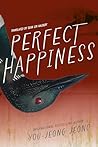
Review: Perfect Happiness

Perfect Happiness Perfect Happiness by You-Jeong Jeong
My rating: 3 of 5 stars

Hooter: Perfect happiness comes at a high cost!

“Perfect Happiness” by You-Jeong Jeong is a calm, cold thriller that never quite explodes, but leaves a steady chill at the back of your neck.

We follow Yuna Shin, whose life looks like it’s been assembled for a glossy brochure – picture-perfect home, curated relationships, everything in its proper place. Very soon you realise that her idea of happiness is less about joy and more about control; anything that doesn’t fit the image is treated like an error to be deleted.

The story unfolds through multiple people around her, each offering a slightly different angle on the same quietly toxic centre. This web of voices works well to build unease, but it also slows the narrative; the tension hums, yet doesn’t always rise.

What stayed with me is the theme – the idea that “perfect” happiness can become a dangerous project, especially in a world obsessed with polished lives and curated joy. What held the book back, for me, was the pacing and the supporting characters, who sometimes feel like props arranged around Yuna rather than people you ache for.

A good, cold read if you like domestic psychological thrillers, but not quite the mind-bender the premise promises.

View all my reviews

Monday, May 04, 2026

Review: The 100-Year-Old Man Who Climbed Out the Window and Disappeared

The 100-Year-Old Man Who Climbed Out the Window and Disappeared The 100-Year-Old Man Who Climbed Out the Window and Disappeared by Jonas Jonasson
My rating: 5 of 5 stars

Hooter: Window‑shopping for adventure, stumbling into greatness.

Allan doesn’t just escape a nursing home; he escapes the burden of taking anything – including history – too seriously. Jonasson’s centenarian shuffles out of a window and straight into a crime caper, dragging along a stolen suitcase, a motley crew, and a trail of increasingly exasperated policemen who seem personally offended by how unbothered he is by all of it.

The real fun, though, is in the parallel timeline where we discover this isn’t Allan’s first rodeo; he has, quite casually, wandered through some of the twentieth century’s biggest moments. Stalin, Franco, Truman, Mao – they all show up like overachieving side characters in what Allan clearly considers a much more important story: his quest for a good meal and a stiff drink. World leaders rant, regimes rise and fall, nuclear decisions hang in the balance, and our man is mostly worried about whether there’s vodka in the vicinity.

What makes the book click is that it refuses to wink at you. The humour is outrageous in what happens, not in how it’s told: a very Swedish, matter‑of‑fact voice narrating bomb blasts, dictators, gangsters, and geriatric fugitives as though this is just Tuesday. Under all the farce is a surprisingly gentle idea – that for all our grand plans and ideologies, a lot of life is random, accidental, and navigated best with a touch of detachment and a well‑timed nap.

View all my reviews

Wednesday, April 08, 2026

Review: Counterattacks at Thirty

Counterattacks at Thirty Counterattacks at Thirty by Sohn Won-Pyung
My rating: 5 of 5 stars

Hooter: Not so average life of an average Joe (Jihye)

I picked up Counter Attacks at Thirty and ended up pleasantly surprised. What struck me most was how easy the writing is to fall into- it reads like a frank chat with a friend about life, the office grind, and trying to find your footing in your thirties.

Jihye is unremarkable by design: a 30‑something doing admin work, barely getting by, and quietly rolling her eyes at bureaucratic absurdities. Then Gyuok arrives and nudges her (and a small group of colleagues) into tiny acts of rebellion- more playful pranks than dramatic revolutions- against the people and systems that’ve worn them down.

What could have been just another workplace story becomes something quietly resonant because it feels real. You see yourself in her hesitations, her small victories, and the way even tiny acts of pushback can shift your perspective. A story that doesn’t reshape your world, but might make you look at yours a little differently.


View all my reviews

Tuesday, March 31, 2026

Review: Rethinking Diabetes: What Science Reveals About Diet, Insulin, and Successful Treatments

Rethinking Diabetes: What Science Reveals About Diet, Insulin, and Successful Treatments Rethinking Diabetes: What Science Reveals About Diet, Insulin, and Successful Treatments by Gary Taubes
My rating: 2 of 5 stars

Hooter: Sugar Uncoated

There are books you read, and then there are books you study. Rethinking Diabetes clearly belongs to the second category.

The premise is promising. A fresh lens on diabetes, questioning long-held assumptions and trying to reframe how we think about metabolism and chronic disease. The opening chapters pull you in with that promise. You expect something sharp, maybe even disruptive.

What you get instead is something far more academic.

The writing is dense and often feels like it belongs in a research paper rather than a general non-fiction book. Sentences stretch, arguments stack on top of each other, and paragraphs demand effort. You do not glide through this book. You work through it. At times it feels like the author is making a case to a room full of experts rather than having a conversation with a curious reader.

That makes it slow. Occasionally tedious. You find yourself rereading sections, not because they are profound, but because they are packed too tightly.

And yet, there is substance here.

One of the more valuable shifts the book offers is moving the conversation away from diabetes as just a blood sugar problem. It pushes you to see it as a broader metabolic issue, shaped by multiple interacting factors. Diet is only one piece. Hormones, inflammation, and long-term physiological adaptations all come into play. It is a more layered view than what most mainstream discussions offer.

The book also questions standardized dietary advice. It leans heavily into the idea that metabolic responses are highly individual. What works for one person may not work for another. This is not entirely new, but the book reinforces it with persistence.

There is also an undercurrent of skepticism toward conventional treatment approaches. Not outright rejection, but a suggestion that too much focus is placed on managing symptoms rather than understanding root causes. That idea stays with you even after you put the book down.

The problem is not what the book says. It is how it says it.

The thoroughness becomes a burden. Points are repeated in slightly different ways. Examples keep coming. The narrative does not move as much as it circles. You begin to feel the weight of the material rather than the clarity of it.

It feels like a book that could have been tighter and sharper but chose to be comprehensive instead.

If you are willing to stay with it, there is a payoff. Not in the form of simple answers, but in a gradual shift in how you think about diabetes and metabolic health. You start questioning neat explanations. You become a little more skeptical of easy fixes.

This is not an easy read. It is not meant to be.

But if you have the patience, it leaves you with something useful. A slightly different way of looking at a very familiar problem. And sometimes that is enough.

View all my reviews

Monday, March 02, 2026

Review: Heart Lamp: Selected Stories

Heart Lamp: Selected Stories Heart Lamp: Selected Stories by Banu Mushtaq
My rating: 4 of 5 stars

Hooter: Lighting emotions up!

Heart Lamp by Banu Mushtaq lingers like a half-remembered dream from a coastal Indian afternoon, its stories slipping under the skin with quiet ferocity. Certain tales grab the raw pulse of longing and ache, turning mundane family frictions into something achingly alive, all without fanfare.

Take "High-Heeled Shoe," where an unborn voice chats with its mother across the veil of life—a strange, tender exchange that twists everyday grief into a visceral throb of what-might-have-been. It lands like a held breath finally released, full of shadowed whimsy that echoes long after.

Then there's "A Decision of the Heart," painting a household cleaved in two by a mother-in-law and daughter-in-law locked in absurd, petty warfare. The barbs fly with wry bite, but beneath simmers a deeper hurt of isolation, making you feel the weight of unseen resentments in every slammed door.

These pieces excel by letting emotions unfold in sidelong glances—wives enduring, children watching sharp-eyed, grandmothers scheming with sly grit—building a mosaic of survival amid southern India's tangled home lives. No sermons, just the hum of lived tension that mirrors your own buried frustrations.

Mushtaq's touch feels effortless, blending dry wit with poignant stabs that reveal human cracks without pity. It's a collection for moody evenings, where the heart's hidden lamps flicker on, illuminating feels you didn't know were waiting. Perfect reread fodder when real life bites back

View all my reviews

Saturday, February 21, 2026

Review: The Priory of the Orange Tree

The Priory of the Orange Tree The Priory of the Orange Tree by Samantha Shannon
My rating: 4 of 5 stars

Hooter: The Queer thing about love in the time of dragons

A thousand pages of dragons, queendoms, and quietly burning faith—and somehow, The Priory of the Orange Tree still feels surprisingly intimate. You’re dropped into Ead’s double life as a secret mage guarding a queen who doesn’t know she’s being protected, TanĂ© risking everything on Choosing Day for a shot at riding a dragon, and an empire betting its survival on women who can’t afford to break.

This is not a breezy weekend read; it’s slow in places, occasionally indulgent, and you feel every extra subplot and POV. But if you give it time, the pay-off is rich: cursed seas, political assassination attempts, an end-of-the-world dragon stirring—and at the centre of all that noise, Ead and Sabran building a fragile, stubborn love story that shouldn’t survive court intrigue, but somehow does.

Come for the wyrms and queens, stay for the orange tree that refuses to bear patriarchal fruit. In this queendom, even the Nameless One has to face the fact that love is the real fireproofing.

View all my reviews

Thursday, January 22, 2026

Review: Yellowface

Yellowface Yellowface by R.F. Kuang
My rating: 4 of 5 stars

Hooter: Like watching a car wreck, directed by Wes Anderson.

Yellowface is a sharp, addictive publishing-world thriller that’s equal parts entertaining and uncomfortable. In a freak accident, a white washed out writer is around a highly accomplished Asian writer when she dies. She has an opportunity to take her top secret book script and pass it off as her own to revive her career. It becomes a roller coaster ride after that.

Slipping into June’s messy, self-justifying mind feels like watching a slow-motion car crash: you cannot look away even as she spirals deeper into theft, racism, and self-delusion. Kuang’s pacing is relentless, her satire of “performative diversity” and online outrage cut-throat, and the result is a book that reads like a Twitter storm you binge in one sitting and then keep thinking about for days

View all my reviews

Review: Yellowface

Yellowface Yellowface by R.F. Kuang
My rating: 4 of 5 stars

Hooter: Like watching a car wreck, directed by Wes Anderson.

Yellowface is a sharp, addictive publishing-world thriller that’s equal parts entertaining and uncomfortable. In a freak accident, a white washed out writer is around a highly accomplished Asian writer when she dies. She has an opportunity to take her top secret book script and pass it off as her own to revive her career. It becomes a roller coaster ride after that.

Slipping into June’s messy, self-justifying mind feels like watching a slow-motion car crash: you cannot look away even as she spirals deeper into theft, racism, and self-delusion. Kuang’s pacing is relentless, her satire of “performative diversity” and online outrage cut-throat, and the result is a book that reads like a Twitter storm you binge in one sitting and then keep thinking about for days

View all my reviews

Sunday, January 04, 2026

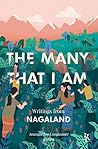
Review: The Many That I Am: Writings from Nagaland

The Many That I Am: Writings from Nagaland The Many That I Am: Writings from Nagaland by Anungla Zoe Longkumer
My rating: 3 of 5 stars

Hooter: "Mia ra vi pie thedze" (Ao Naga: There is no place like home)

Homecoming is a vibrant collation of Nagaland writing by women authors, filled with poems, songs, folk tales, and stories that capture the many layers of a land shaped by multiple tribes and narratives passed down over centuries.

There is deliberate curation around monumental events in the region’s shared history: the arrival and adoption of Christianity, the rebel movement that left civilians caught between two extremes, and the clash between Western education and traditional learning systems.

From imagining a world run by women to meditations on the art of forgiveness, the editor brings together non-stereotypical themes that resist easy categorisation. The piece that stayed with me most was the one where the protagonist struggles to adjust to changing times—Kohima’s urbanisation and concretisation, the natural landscape giving way to houses—until, as he puts it, he loses his nerve because “his sun had been stolen.” Having been in Kohima, I could visualise exactly what he meant, which made the story far more relatable.

The tattoo story, too, offers a striking and memorable take on the origins of design in a tribal lifestyle, grounding aesthetics in lived experience rather than abstraction. This collection is a rewarding entry point for anyone seeking literary, women-led windows into Nagaland’s past and present.

View all my reviews

Thursday, January 01, 2026

Review: Verity

Verity Verity by Colleen Hoover
My rating: 3 of 5 stars

Hooter: Mildly messed‑up mind games

“Verity” is the kind of book that makes you double‑check your door locks, but not necessarily your worldview. It is a twisty psychological romantic thriller that leans hard on shock value, messy intimacy, and moral grey zones, but under all that noise, the core feels more like fast food than a slow, satisfying meal.

It felt like being trapped in a slightly trashy, very bingeable soap opera where everyone has a secret document and nobody has a therapist. The found‑manuscript device is deliciously creepy and the pages do fly, but once the dust (and body count) settles, the big moral ambiguity feels more like a clever party trick than a genuinely earned gut‑punch. Fun enough for a late‑night sprint, but TikTok’s “you will never recover” hype is wildly disproportionate to what is, at heart, a fast, messy thriller that you forget almost as quickly as you finished it.


View all my reviews