Tuesday, July 21, 2026

Review: James

James James by Percival Everett
My rating: 4 of 5 stars

Hooter: “Lawdy, freedom ain’t jest chains off; it be chains out da head.”

James by Percival Everett is a sharp, harrowing reimagining of Huckleberry Finn told from Jim’s point of view. Early on, we see him hiding on Jackson Island after learning Miss Watson plans to sell him, meeting Huck there and turning the familiar river journey into a desperate attempt to stay alive and someday reclaim his family.

Everett’s standout move is in the language: James uses a “slave filter,” speaking caricatured dialect to white people (“Who dat dere in da dark lak dat?”) while coaching children like Lizzie in “correct incorrect grammar” for Miss Watson—“dat be” instead of “dat is”—in secret lessons back in their cabin. In private, he debates Voltaire in a fever dream and discusses ideas like “proleptic irony,” making it clear that the broken English is a performance, not a limitation.

Where the book turns divisive is in its final act, when James’s anger fully erupts: he kills a sadistic overseer, forces Judge Thatcher at gunpoint to reveal where his wife and daughter have been sold, and helps incite a violent mass escape from a slave‑breeding plantation before finally naming himself “James” in Iowa.

View all my reviews

Saturday, July 11, 2026

Review: Shattered Lands: Five Partitions and the Making of Modern Asia

Shattered Lands: Five Partitions and the Making of Modern Asia Shattered Lands: Five Partitions and the Making of Modern Asia by Sam Dalrymple
My rating: 4 of 5 stars

Hooter: Akhand Bharat as a five course meal

There are books that add to what you know, and there are books that rearrange it. Shattered Lands: Five Partitions and the Making of Modern Asia firmly belongs in the second camp. I opened it expecting a familiar 1947 story; I closed it asking how many countries we have quietly erased from our idea of “India.”

Dalrymple’s premise is stark. As late as the 1920s, a single political unit called the Indian Empire stretched from Afghanistan’s borders to the jungles beyond Burma, taking in today’s India, Pakistan, Bangladesh, Burma, Nepal, Bhutan and a chain of Arabian protectorates. The maps we coloured in school turn out to be the epilogue, not the prologue.

Arabia: India’s missing coastline
The most disorienting and, for me, absorbing section shifts our gaze west. Dalrymple reconstructs a world where the “Middle East” was not a distant headline but part of British India’s administrative machinery. Ports like Muscat, Doha and Dubai reported into Delhi, Indian rupees anchored Gulf bazaars, and Indian Political Service officers shuttled between Bombay and the Arabian shore.

Then comes the slow unravelling: Aden’s separation in the late 1930s, debates in London about whether independent India or Pakistan should inherit responsibility for the Gulf, and finally an April 1947 decision that quietly lifts the Gulf states out of the “Indian” column just months before the Raj itself is divided. Dalrymple resists sensational “what if India owned the oil” detours; instead, he shows how this administrative surgery has since faded from both Indian and Gulf memory.

As an Indian reader used to viewing the Gulf mainly through the lens of work visas and remittances, I found these chapters genuinely unsettling. Once you see the Gulf as a former Indian frontier-legally and bureaucratically - every news story about NRIs or oil feels faintly haunted.

Burma: the partition before Partition
If Arabia is a forgotten coastline, Burma is the missing chapter. Dalrymple treats the 1937 separation of Burma from British India as the first major crack in the imperial edifice, not a footnote in a civics textbook. He follows Burmese and Indian voices through the debates over separate administration and shows how the split left more than a million Indians in Burma scrambling to redefine themselves in a suddenly foreign land.

Here the “people’s history” approach comes alive. We walk alongside traders whose routes no longer work, dockworkers whose wages vanish under new rules, and families whose passports stop matching the place they call home. When Dalrymple links this earlier partition to a narrowing imagination of “India” and to the ideological hardening that shapes 1947 and 1971, it feels like a long, slow tightening rather than a clever academic leap.

For readers who only encounter Burma today in stories about coups or refugees, these chapters read like a prequel we should have had all along. Once you realise Rangoon’s story was once tangled up with Calcutta’s and Madras’s, the present suddenly looks less self-contained.

Five partitions, many lives
Although the Arabian Gulf and Burma form the emotional core of the book, Dalrymple structures his narrative around five partitions: Burma in 1937, the staged separation of Aden and the Gulf, the 1947 division of India and Pakistan, and the birth of Bangladesh in 1971. He stitches together cabinet minutes and multilingual interviews to show how each new line on the map sliced through existing networks of trade, kinship and belief.

We meet merchants watching their business shrivel as borders harden, soldiers asked to serve under new flags, and families deciding whether to move, split or stay as cartographers redraw their world. By the end, “partition” feels less like a single date on a timeline and more like a recurring method of imperial exit.

View all my reviews

Monday, July 06, 2026

Review: Becoming Bangalore: Stories That Shaped a Hometown

Becoming Bangalore: Stories That Shaped a Hometown Becoming Bangalore: Stories That Shaped a Hometown by Roopa Pai
My rating: 4 of 5 stars

Hooter: Namma Bengaluru, one story at a time.

“Becoming Bangalore: Stories That Shaped a Hometown” feels like sitting with a chatty, well-read older cousin who loves this city a little too much and wants you to love it back.

Roopa Pai picks up Bengaluru like a jigsaw puzzle and starts turning over the pieces – a maharani’s foresight here, a scientist’s obsession there, an entrepreneur’s gamble somewhere else. One chapter has you walking under jacaranda and tabebuia, in a city that seems to have decided its trees must take turns blooming so residents never run out of colour. Another suddenly tells you that our very own seemebadanekayi, the humble “chow chow” in your sambar, is here because a horticulture director at Lalbagh once decided to experiment in the late 19th century.

My favourite bits are where history casually bumps into everyday Bangalore. There’s an essay that makes you look at Russell Market differently the next time you haggle for flowers or “English vegetables”, reminding you it was once the gleaming one-stop shop for colonial kitchens and has just been lovingly restored. There’s a piece that connects the city to early electric lighting and Aryabhata, and another where Narayana Murthy and Sudha Murty’s story becomes shorthand for an entire generation’s Infotech dream.

What gives the book its heart is the layering – columns, reader memories, Roopa’s own childhood flashes, little jokes only a Bengalurean will fully appreciate. If you’ve ever waited for a table at a legendary dosa joint, complained about traffic on your way to Cubbon Park, or claimed a favourite flowering tree on your office route, this book will keep nudging you and saying, “See, your city’s been becoming for centuries. You just joined mid-season.”

View all my reviews

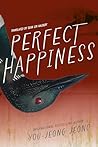
Review: Perfect Happiness

Perfect Happiness Perfect Happiness by You-Jeong Jeong
My rating: 3 of 5 stars

Hooter: Perfect happiness comes at a high cost!

“Perfect Happiness” by You-Jeong Jeong is a calm, cold thriller that never quite explodes, but leaves a steady chill at the back of your neck.

We follow Yuna Shin, whose life looks like it’s been assembled for a glossy brochure – picture-perfect home, curated relationships, everything in its proper place. Very soon you realise that her idea of happiness is less about joy and more about control; anything that doesn’t fit the image is treated like an error to be deleted.

The story unfolds through multiple people around her, each offering a slightly different angle on the same quietly toxic centre. This web of voices works well to build unease, but it also slows the narrative; the tension hums, yet doesn’t always rise.

What stayed with me is the theme – the idea that “perfect” happiness can become a dangerous project, especially in a world obsessed with polished lives and curated joy. What held the book back, for me, was the pacing and the supporting characters, who sometimes feel like props arranged around Yuna rather than people you ache for.

A good, cold read if you like domestic psychological thrillers, but not quite the mind-bender the premise promises.

View all my reviews